

The golf cart—humble, practical, and far more than a shuttle around golf greens. You might not think golf carts are the most interesting vehicles in the world, but there’s more than meets the eye! For instance, ever wonder how this compact vehicle made its way from the manicured fairways of exclusive golf clubs to the streets of neighborhoods, beaches, and bustling tourist towns?
From its clunky beginnings to its reinvention as a utility and leisure vehicle, the complete evolution and history of the golf cart is a tale worth exploring. By the end of this post, you might find yourself looking at one of these wheeled wonders differently and excited to get behind the wheel in your very own rental. Let’s dive in!
Where It All Began
Every invention got its start somewhere. How did it begin for golf carts?
Its Origin as a Mobility Aid
The first golf cart’s story begins in the 1930s—1932, to be exact. Lyman Beecher, a golfer with arthritis who struggled to walk long distances, imagined the first design. His idea was a battery-powered, rickshaw-type cart that two of his caddies would steer. Models that quickly followed looked similar or like motorized tricycles. They were hard to maneuver and far from stylish, but they helped people get around and transport golf gear more easily.
Entering the 1950s
Fast-forward to the post-war era of the 1950s, when recreational golf exploded in the United States. Suddenly, many courses began investing in technologies that would make the game more accessible, particularly for older or mobility-challenged players. What better vehicle than the already vetted golf cart?
The surge in popularity was partly due to an oil tycoon named R.J. Jackson. He patented a gasoline-powered cart featuring three wheels. Though popular, the design soon fell out of favor because it was noisy and produced heavy fumes.
Electrifying Improvements
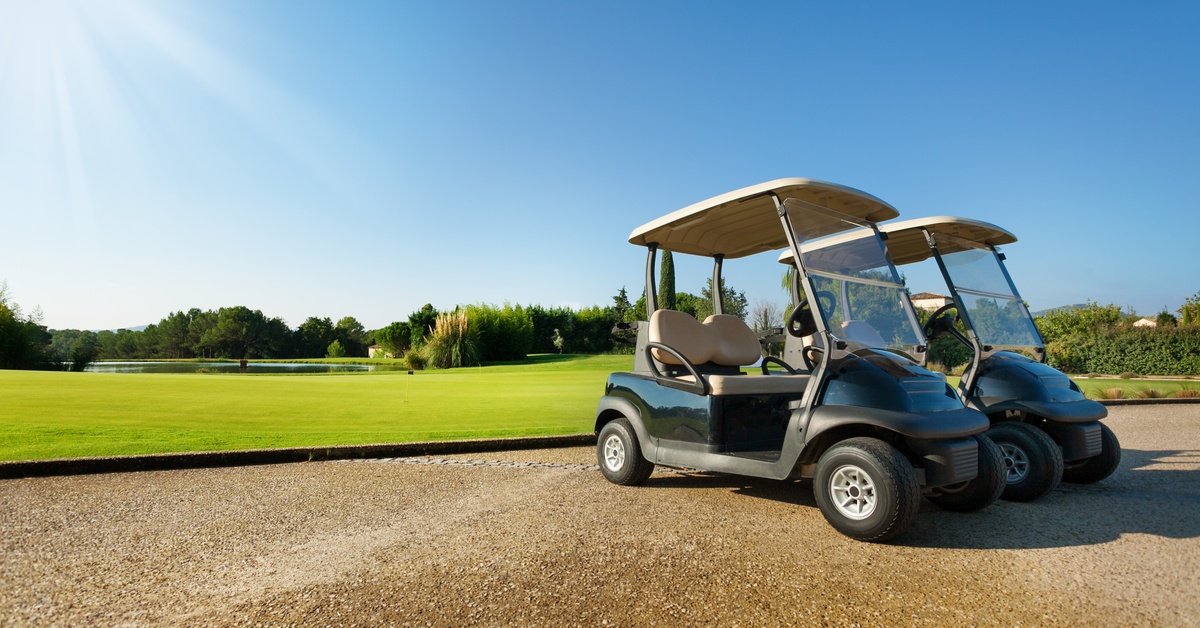
Electric vehicles were in favor for several reasons. First, players enjoyed the smooth, quiet ride. Second, course operators spent less on fuel and maintenance. Plus, players weren’t bothered by the loud roar of a gas engine while taking shots.
It was a no-brainer, environmentally and financially. However, manufacturers and golfers alike soon started realizing the need for improvements on the electric golf cart design. Here’s a sneak peek at the top companies that made a name for themselves in the electric golf cart industry.
Marketeer
One of the first companies to pick up on the golf cart trend and improve it was Marketeer, founded in 1951 by Merle Williams in California. Armed with expertise in electrical appliances, Williams created one of the first successful electrically powered golf carts. Marketeer golf carts were quiet, efficient, and started to gain popularity quickly for their usability.
E-Z-GO
The innovation didn’t stop there. The roaring success of Marketeer inspired competitors to step into the sandbox (or the fairway). Enter E-Z-GO, a company founded by two brothers, Beverly and Billy Dolan, in 1954. Built out of their one-room shop, E-Z-GO quickly grew to prominence because of their focus on lightweight, dependable carts that delivered on durability and comfort. Their growth story resonated with golf courses looking for effective solutions.
Gas-Powered Pioneers
You might think that gas-powered golf carts would have preceded electric models, but that wasn’t the case. The first commercially successful gas golf carts arrived in 1954 from no other than E-Z-GO. These carts weren’t sleek, quiet, or eco-friendly, but they were functional. Heavy-duty steel frames paired with rudimentary controls got the job done, but reliability and comfort weren’t up to modern standards.
Expanding Beyond the Greens
By the late 1970s, golf carts began flexing their versatility. Why limit their use to fairways? Many communities realized that electric carts could solve some neighborhood transportation issues—including noise ordinances, tight parking spaces, and short commutes.
This resulted in an explosion of golf cart popularity in communities like Sun City, Arizona, and it was the beginning of a broader lifestyle shift.
The Golf Cart Renaissance
While basic two-seat golf carts were the norm for decades, the 1990s saw a shift toward customization and multi-use vehicles. No longer just for tee time, modern carts were outfitted with everything from rear seats to sunshades, cooler racks, and even stereo systems.
Homeowners in resort or gated communities began casually cruising to grab groceries, visit neighbors, or shuttle guests around holiday parties. Some even started customizing carts with paint jobs, lift kits, and high-tech add-ons, turning what was once a functional vehicle into a statement piece.
Golf Carts in Pop Culture
Around this time, golf carts also entered pop culture. From cameos in blockbuster films to their frequent use on sprawling Hollywood sets, golf carts transitioned from being novelties to lifestyle icons. The rise of vacation-centric reality shows only cemented their charm as celebrities zipped around private estates or Caribbean resorts in carts.
A Look at Modern-Day Carts
Today’s golf carts are a far cry from their rudimentary ancestors. Manufacturers continually develop models that offer better design, materials, and technology. Some recent manufacturing priorities include the following:
- Sleek designs: Premium finishes, ergonomic bucket seats, and LED headlights create a high-end automotive feel.
- Smart tech: Bluetooth speakers, GPS navigation, and keyless entry make modern golf carts as tech-savvy as full-sized cars.
- More eco-friendliness: Lithium-ion batteries have largely replaced acid-based ones, offering longer battery life and quicker recharge times. Some brands even offer solar-powered models!
Golf Cart Laws and Regulations

From suburban streets and seaside resorts to sporting events and college campuses, you’ll find more golf carts today off golf courses than on them.
However, not every state embraces freewheeling golf cart culture quite the same way. Increasing safety concerns with public road use have led to tighter regulations. Today in the US, most areas require carts to be street legal, which usually entails blinkers, seat belts, and safety flags, before they can venture onto busy roads.
You still can’t take street-legal carts on the freeway, but they remain incredibly popular in pedestrian-friendly towns and tourist destinations.
Why Are Golf Carts Everywhere?
The enduring charm of golf carts after their long history and evolution boils down to simplicity and joy. They’re easy to operate, relatively affordable compared to full-sized vehicles, and shockingly versatile. Whether you use one for leisure, utility, or work, these carts foster the very sense of convenience we all crave.
Golf Carts and Your Next Adventure
Heading to Destin, Florida, for a beach town vacation? Take the hassle out of exploring by renting a golf cart. We offer Destin golf cart rentals so you can cruise around town in style and comfort. These rentals aren’t just a way to get from point A to point B; they’re a promise of laid-back adventure and fun. Reach out to us to book your freewheeling vacation transportation today!